
3rd3rd Marketing Says Reaching the Next Generation of Aging Adults Requires Rethinking Ageism
SEATTLE, Wash., Oct. 9, 2026 (SEND2PRESS NEWSWIRE) — On Ageism Awareness Day, leaders at 3rd3rd Marketing, the “Un-Senior Living Agency,” are challenging senior living organizations to take a closer look at the images, language and assumptions they use to communicate with consumers.
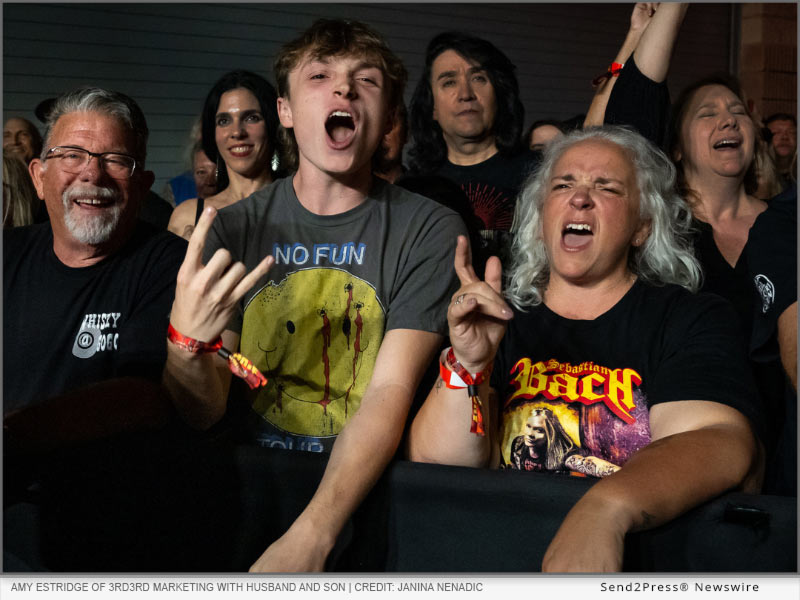
PHOTO caption: Amy Estridge, of 3rd3rd Marketing, pictured with her husband and son at a Sebastian Bach concert, advocates for authentic, age inclusive advertising messaging. (Credit: Janina Nenadic.)
The World Health Organization defines ageism as stereotypes, prejudice and discrimination directed toward people based on their age. In senior living marketing, those stereotypes can be subtle: assuming people of a certain age want the same things, portraying aging primarily through frailty or dependency or defining consumers by the year they were born rather than who they are and how they want to live.
As senior living marketers work to reach baby boomers while preparing for Gen X, it’s increasingly important to recognize that age-based assumptions can mischaracterize how people actually see themselves and want to live as they age.
With the oldest members of Gen X turning 61 this year, many are already researching communities for their parents, comparing options, reading reviews and reaching out to sales teams.
Amy Estridge, Director of Account Services & Growth at 3rd3rd Marketing, calls this the “two-lens customer” because at the same time, they’re forming their own opinions about whether senior living could ever fit the future they imagine for themselves. Many continue managing family and career responsibilities into their 60s, and traditional ideas about retirement may not match how they see their next chapter.
For Gen X, choice, flexibility, transparency and control may be increasingly important. They also have plenty of tools to determine whether marketing promises match reality, from websites and online reviews to social media and firsthand experiences shared by residents, employees, friends and family.
One simple place to start: Market to the person, not the age.
“People don’t wake up on a particular birthday and suddenly become a demographic,” Estridge said. “If we want our marketing to resonate, we need to understand the person first and their age second.”
Senior living leaders should understand they’re selling healthspan and potential. Marketers have power in their messaging, and the impact is real. For example, Yale gerontologist Becca Levy found that older adults with positive self-perceptions of aging live 7.5 years longer than those with negative ones. Ageist messages don’t just affect self-esteem; they affect health, vitality and longevity.
That means moving beyond predictable images and familiar adjectives like vibrant, exceptional and engaging and showing what life actually looks like. It also means understanding consumers through their values, aspirations, behaviors and priorities rather than relying on assumptions tied to an age bracket.
“Gen X may be looking at senior living for Mom or Dad today, but they’re also paying attention to whether what they see reflects the way they want to live in the future,” said Estridge. “If what they see is an outdated stereotype of aging, that’s shaping their perception of senior living before we’ve ever tried to market to them.”
At Hillcrest, a senior living community in La Verne, Calif., 3rd3rd helped shift storytelling and imagery to focus on more culture, creativity and interpersonal relationships. Occupancy increased from 90% to 97% over the following seven months.
Research suggests those stereotypes can affect how consumers respond to brands. Ageism can show up in images as much as words. AARP found one in five respondents said they decided not to buy from a brand because of age stereotypes in advertising.
Additionally, research in the British Journal of Dermatology found that only 6% to 23% of people at age 50 have at least 50% gray hair; while a Getty Images search for people in their 50s predominantly shows gray-haired people who often appear older, reinforcing an inaccurate picture of what 50 actually looks like.
“Ageism in marketing doesn’t always look insulting. Sometimes it looks perfectly nice,” said Cynthia Thurlow, President and CEO of 3rd3rd Marketing. “It can be assuming everyone of a certain age wants the same lifestyle or deciding what matters to them before we’ve even asked. If we’re serious about changing how people experience aging, we have to change the assumptions behind how we talk about it.”
For senior living communities, addressing ageism in marketing will take more than changing a few words and swapping outdated photography. Communities need to provide prospective residents with evidence instead of adjectives, make pricing and services easier to understand and show what senior living can add to someone’s life.
On Ageism Awareness Day, 3rd3rd encourages senior living leaders to start by asking two questions:
What does your organization do because older consumers genuinely value it? And what does it do simply because senior living has always done it that way?
The answers may reveal an opportunity to rethink how senior living views aging itself.
ABOUT 3RD3RD MARKETING
3rd3rd Marketing is the “Un-Senior Living Agency,” partnering with senior living communities and mission-driven aging services organizations globally. By dismantling stereotypes and replacing them with aspirational narratives, 3rd3rd helps organizations to build authentic connections, increase engagement and achieve lasting impact. For more information, visit: https://3rd3rd.com/.
MULTIMEDIA:
PHOTO link for media: https://www.Send2Press.com/300dpi/26-1009-s2p-3rd3rd-300dpi.webp

PHOTO caption: Amy Estridge, of 3rd3rd Marketing, pictured with her husband and son at a Sebastian Bach concert, advocates for authentic, age inclusive advertising messaging. (Credit: Janina Nenadic.)
NEWS SOURCE: 3rd3rd Marketing
This press release was issued on behalf of the news source (3rd3rd Marketing), who is solely responsible for its accuracy, by Send2Press Newswire.
To view the original story, visit: https://www.send2press.com/wire/were-not-gonna-take-it-gen-x-expects-a-different-senior-living-experience/
Copr. © 2026 Send2Press® Newswire, Calif., USA. -- REF: STORY ID: NEO138755 NEONET25C